AI Factory
4 min read
How Perfetti Van Melle made its E-commerce content production x10 faster
A case study in what production-grade AI automation looks like when brand rules, platform compliance, and SEO must all be met at once.
.png)
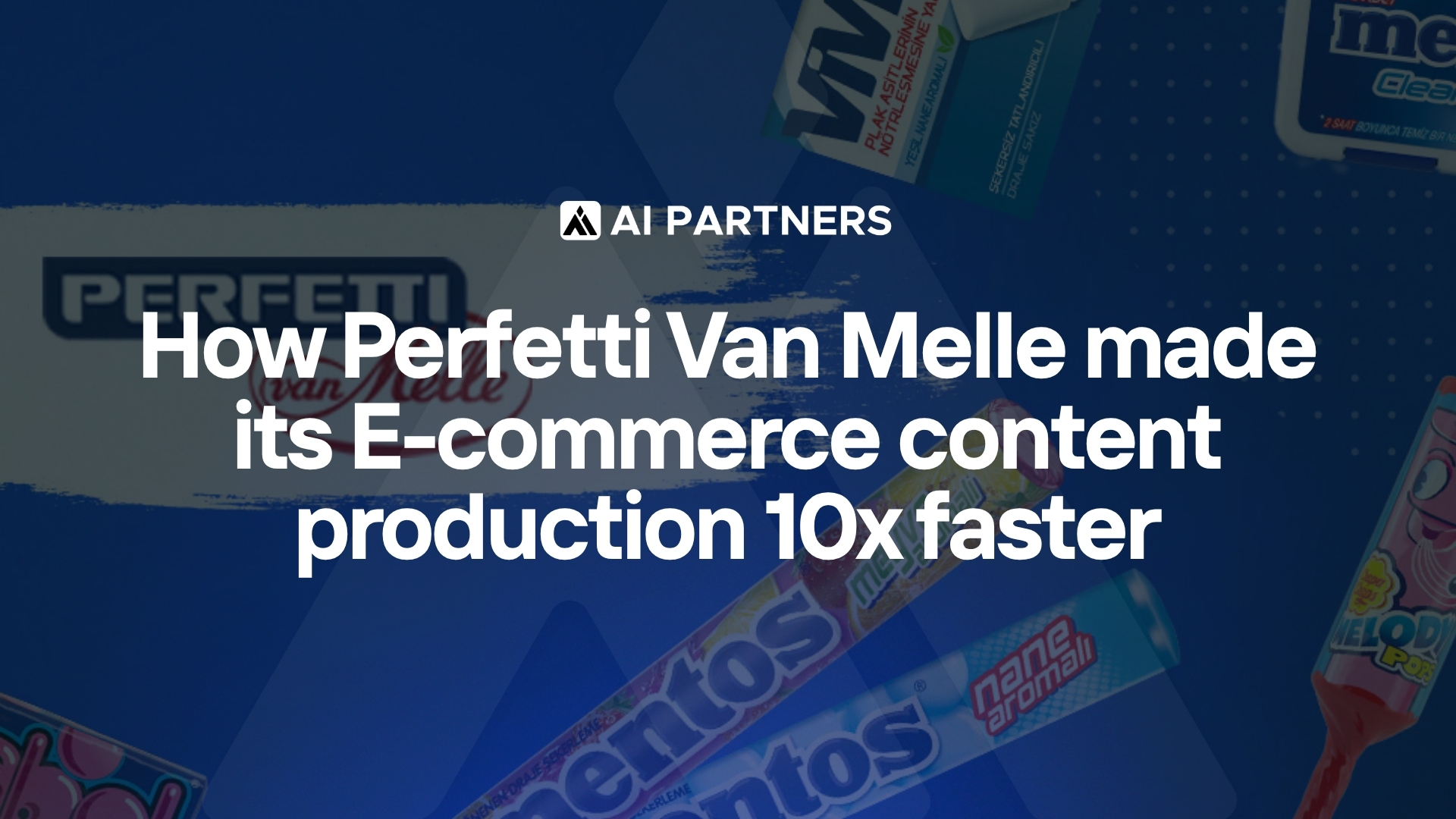
Perfetti Van Melle is one of the world's leading confectionery companies, present in hundreds of countries with brands including Mentos, Chupa Chups and Fruit-tella. On the e-commerce channel, that presence translates into a considerable volume of content: hundreds of references to adapt across multiple platforms, each with its own editorial requirements.
The difficulty was not only the volume. Each product page had to simultaneously respect the brand identity, comply with the rules of each distribution platform, and incorporate the right keywords to ensure product visibility. Reconciling these three requirements manually produced slow and uneven results across the catalogue.
Perfetti Van Melle came to AI Partners with a clear objective: automate the production of e-commerce content while guaranteeing consistent quality across all references and platforms.
AI Partners designed an agent capable of automatically generating product content by integrating brand constraints, the specific rules of each distribution platform, and SEO requirements simultaneously. Every piece of content delivered is compliant, consistent and optimised, with no manual intervention reference by reference.
"We now publish our product pages in a matter of minutes instead of several days, and every text finally respects the brand tone and our retailers' rules."
E-commerce Team, Perfetti Van Melle
The most complex constraint was not the volume, it was the multiplicity of rules to apply at the same time. Content that respects the brand but not the platform gets rejected. Content that complies with the platform without SEO optimisation generates no visibility. The challenge was to master these three registers simultaneously, across every reference, without any degradation in quality.
It is this level of combined rigour that distinguishes superficial automation from a solution genuinely deployable at the scale of an industrial catalogue.
The Perfetti Van Melle project demonstrates what production-grade AI automation looks like in practice: not a tool that generates text, but an agent that simultaneously applies brand rules, platform requirements, and SEO logic across hundreds of references without quality loss. Building this kind of system requires designing, testing, and maintaining agents that operate reliably in production environments. AI Partners deploys production-grade AI agents for organisations through its AI Factory programme, from designing the automation logic to maintaining agents in live production environments.