AI First Organization
5 min read
How L'Oréal LDB identified its AI priorities for its medical sales force across 12 markets
From seven possible initiatives to a shared roadmap of five validated priorities, aligned across 12 markets in 2h30.
.png)
L'Oréal Dermatological Beauty has built its commercial model on a key relationship: the one between the medical representative and the healthcare professional. This relationship connects L'Oréal LDB's scientific expertise to prescription decisions across its leading dermatological brands.
But usage patterns were shifting rapidly. Dermatologists, general practitioners, and pharmacists were increasingly turning to AI to get answers to questions they previously addressed to their medical representative. Not because the representative lacked expertise, but because information was becoming instantly accessible. L'Oréal LDB needed to anticipate this evolution across 12 markets and identify the most strategic initiatives to launch.
L'Oréal LDB came to AI Partners with a clear objective: identify the most strategic AI initiatives for its medical sales force by 2026 and 2027, while ensuring their relevance across 12 markets.
Upstream, several months of investigation had been conducted with field teams across EMEA, Asia, and the Americas. This work documented the main challenges faced by medical representatives, analysed the evolution of AI adoption among healthcare professionals, and assessed the feasibility of the various options being considered.
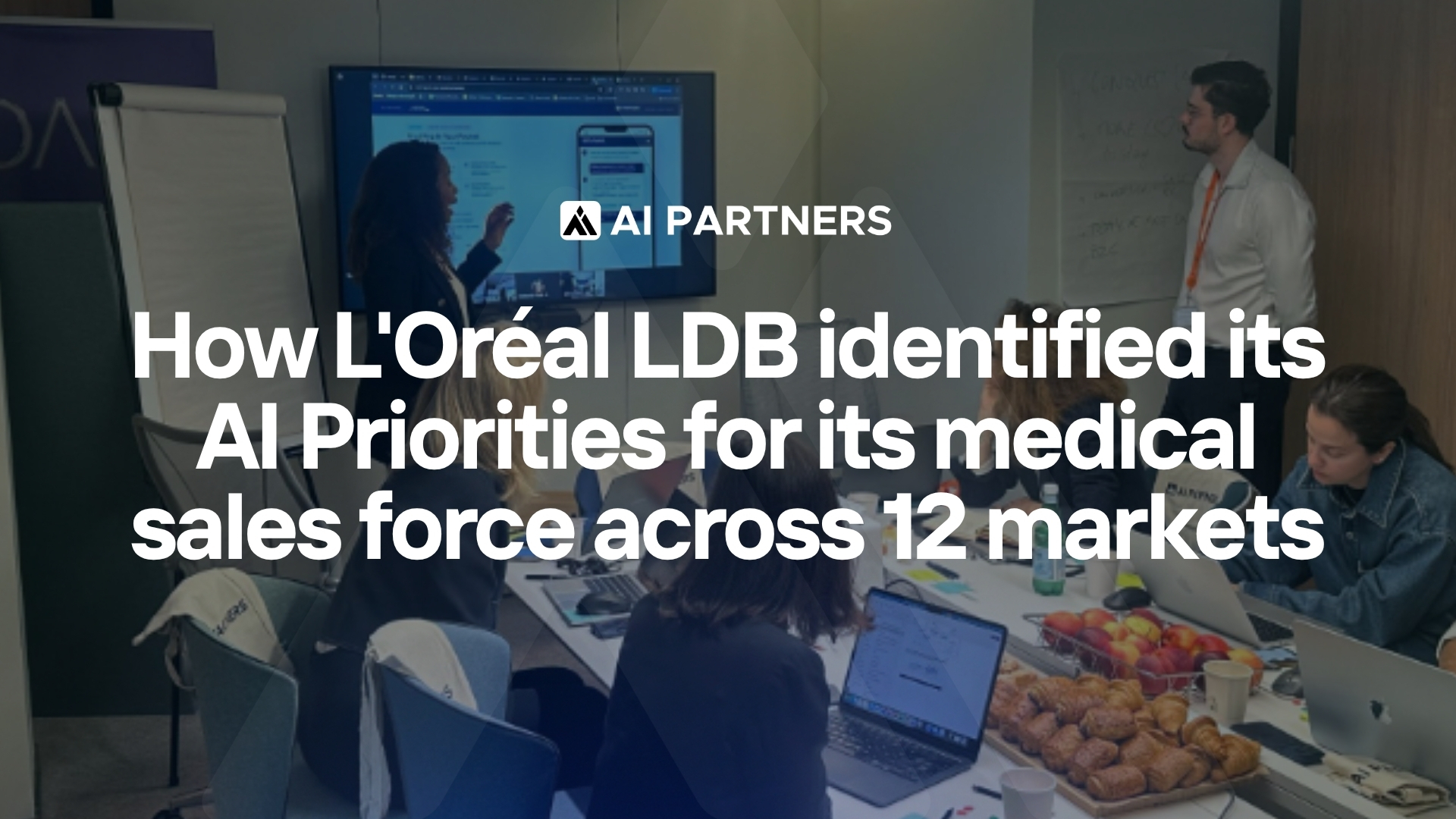
At the end of this phase, seven priority use cases had been identified. The mission of the session was to enable twelve international decision-makers to arbitrate collectively, prioritise the most promising opportunities, and converge on a shared roadmap.
Bringing together twelve decision-makers from different markets, functions, and operational realities does not guarantee alignment. The objective of the session was not to generate new ideas, but to enable rapid arbitration between opportunities that had already been identified and documented.
Through a structured prioritisation process, participants evaluated each use case according to its business value, its potential impact on field teams, and its feasibility of implementation. Differences in perception were made explicit, debated, and collectively resolved.
In 2h30, the executives moved from a list of seven possible initiatives to a shared roadmap of five validated priorities for 2026 and 2027.
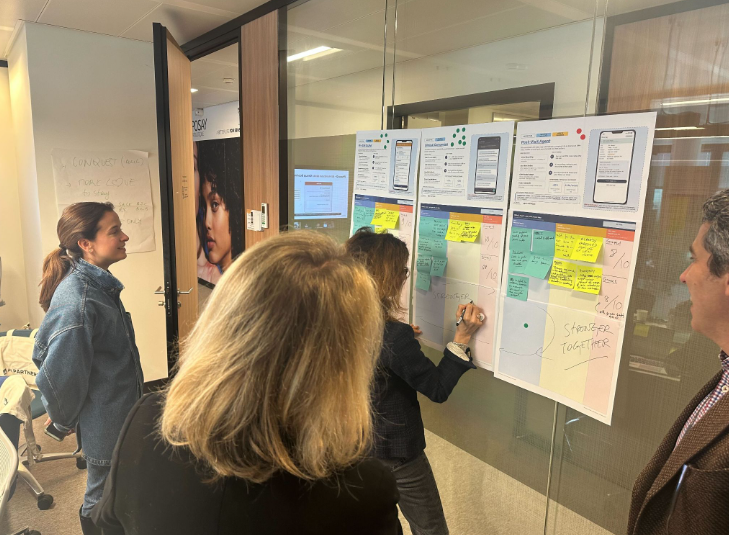
The session produced clear decisions because the hard work had already been done. Field problems were documented, solutions were pre-validated technically. The room was not debating whether the challenges were real. It was deciding what to build.
The structured format kept executives focused on what mattered. Differences in perception between groups, far from being obstacles, were the most useful moments of the session, forcing strategic disagreements that would otherwise have remained implicit to be made explicit.
Identifying the right AI priorities is rarely a technology question. It is a strategic alignment question. The L'Oréal LDB session worked because the upstream investigation had already transformed ambiguity into documented options, leaving the room to do what senior decision-makers do best: arbitrate. AI Partners supports organisations at this stage of their AI journey, from mapping use cases to facilitating strategic alignment across markets, through our AI First Organization programme.